
Made by
Aristocrat
Learn all Where’s the Gold symbols, payouts, wilds and scatters. See how the paytable works and what triggers the Gold Feature.
18+ only. New players only. Wagering requirements apply. Play within your means.
Made by
Aristocrat
RTP
95%–96%
Volatility
Medium to high
Best payout
1,000x
Style
Classic 5-reel
Bet range
AU$0.01–AU$100
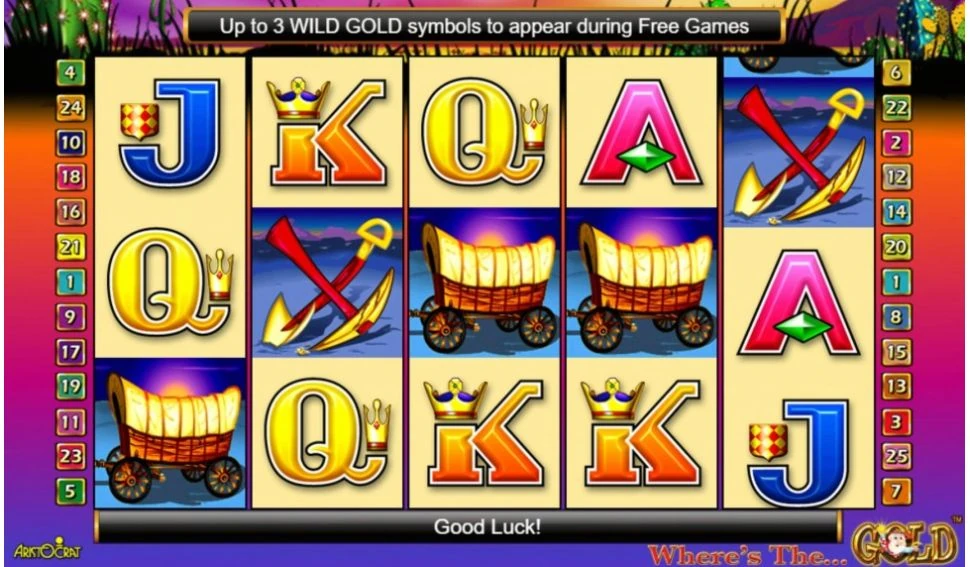
Where’s the Gold symbols are a big part of what makes this classic Aristocrat pokie so easy to recognise. Set on a gold rush backdrop with outback mining visuals, the game uses a familiar 5-reel, 3-row layout and mixes premium themed icons with standard card royals, plus a feature-triggering scatter and bonus wild mechanic.
If you want to understand exactly what each symbol does, this page breaks down the full Where’s the Gold paytable, regular symbol values, the dynamite scatter, and the Wild Gold feature that appears during free spins. It’s designed for Australian players who want a clearer idea of where the wins come from before heading back to the main game.
At a glance, the key Where’s the Gold symbols are:
Where’s the Gold is played on a 5x3 reel setup with 25 fixed paylines, so every line is active on every spin. Standard winning combinations usually pay from left to right across adjacent reels, while scatter wins work differently and can land anywhere on the screen.
The Where’s the Gold paytable is split into two main parts: regular pay symbols and special symbols. Regular symbols include the prospector, mine shaft, wagon, pickaxe & shovel, and the lower-paying card royals. These usually pay for 3, 4 or 5 of a kind, although the top premium symbols can often also pay from 2 of a kind. Special symbols include the dynamite scatter, which triggers the bonus, and the Wild Gold symbol used during free spins.
Like most Aristocrat pokies, the total value of a line win depends on the line bet multiplied by the symbol payout shown in the paytable. That means the same symbol combination can pay more or less depending on your stake level.
Key points to remember:
Here’s a quick breakdown of all Where’s the Gold symbols you’ll see on the reels. While some online versions can show minor artwork or paytable differences, the core symbol set stays largely the same.
This mix gives the game its familiar rhythm: smaller base-game hits from royals and mid symbols, with the biggest potential tied to premium combinations and the free spins feature.
The highest-paying Where’s the Gold symbols are all tied to the game’s mining theme. These are the icons most players want to line up in the base game, especially across 4 or 5 reels. They don’t appear as often as the card royals, but when they do connect, they deliver the strongest regular line wins on the paytable.
The Prospector is the standout symbol and typically ranks as the most valuable regular icon in the game. Behind it comes the mine shaft, followed by the wagon and pickaxe & shovel. Depending on the version, the top two symbols may also pay from just 2 matching symbols, which is less common among lower-value icons.
| Symbol | Theme description | 2 of a kind | 3 of a kind | 4 of a kind | 5 of a kind |
|---|---|---|---|---|---|
| Prospector | Gold miner character | 5 | 25 | 100 | 1000 |
| Mine Shaft | Mine entrance icon | 5 | 20 | 80 | 500 |
| Wagon | Mining wagon/cart | – | 15 | 40 | 300 |
| Pickaxe & Shovel | Mining tools | – | 10 | 30 | 200 |
Slide the table across to reach every column.
These figures are commonly associated with public versions of the Where’s the Gold paytable and give a solid guide to the symbol hierarchy. The exact credit values shown in-game will still depend on your selected bet.
The reason these premium symbols matter so much is simple: they carry most of the line-win potential in the base game. A 5-of-a-kind Prospector combination can be one of the best regular hits available outside the feature, while the mine shaft is another strong symbol to watch for. The wagon and pickaxe & shovel land more often, so they tend to support more frequent mid-range wins.
In practical terms, this creates a familiar pokie pattern. The top-paying symbols are rarer, but their multipliers are much stronger than the lower-value royals. That balance helps give Where’s the Gold its medium-to-high volatility feel, especially when you’re waiting for either a premium line-up or a bonus trigger.
The low-paying Where’s the Gold symbols are the card royals, styled to match the game’s gold rush look. These icons appear more frequently on the reels and are responsible for many of the smaller, more regular payouts during standard play.
Among the royals, Ace is usually the highest-paying, followed by King, Queen, and Jack.
| Symbol | 3 of a kind | 4 of a kind | 5 of a kind |
|---|---|---|---|
| A | 10 | 25 | 100 |
| K | 10 | 25 | 75 |
| Q | 5 | 20 | 50 |
| J | 5 | 15 | 25 |
Slide the table across to reach every column.
These symbols are important even though they don’t offer the headline payouts of the themed icons. In long sessions, royals help keep the reel action moving and often make up the bulk of ordinary line wins.
A few things to know about them:
If you’re specifically searching for the Where’s the Gold wild symbol, the important detail is that this game does not usually use a standard wild in the base game. Instead, its wild mechanic is tied to the bonus round, where the special Wild Gold symbol comes into play.
That means during normal spins, your main focus is on landing the dynamite scatter to unlock the feature. Once free spins begin, the game assigns certain symbols to become Wild Gold symbols for the duration of the bonus. This is where much of the game’s biggest win potential comes from.
| Game phase | Wild symbol present | How it works |
|---|---|---|
| Base game | Usually no standard wild | Regular spins focus on line wins and scatter triggers |
| Free spins | Wild Gold | Chosen symbols transform and substitute for regular pays |
Slide the table across to reach every column.
During the Gold Feature, Wild Gold can dramatically improve the strength of the reels because it helps complete combinations that might otherwise miss by one symbol. It can also create multiple winning lines from the same spin, especially when premium icons are involved.
Wild Gold behaviour usually works like this:
For many players, this is the real heart of Where’s the Gold. The base game sets up the action, but the Wild Gold mechanic is what gives the feature round its extra punch. If you hit free spins with a strong wild setup and enough premium symbols on the reels, the win potential rises quickly.
The official Where’s the Gold scatter symbol is the dynamite icon. Unlike standard pay symbols, the dynamite scatter does not need to land on a payline to count. As long as enough scatters appear anywhere on the reels in the same spin, they can award a payout and trigger the bonus feature.
This is a key detail in the Where’s the Gold paytable because the scatter symbol serves two roles at once: it can pay on its own, and it also unlocks the game’s most important feature. That makes it one of the most valuable symbols in practical terms, even though it doesn’t behave like a normal line-pay icon.
A typical scatter payout table looks like this:
| Dynamite scatters | Payout |
|---|---|
| 3 | 2x total bet |
| 4 | 10x total bet |
| 5 | 50x total bet |
Slide the table across to reach every column.
Landing 3 or more dynamite scatters usually triggers the Gold Feature, which is the free spins round where Wild Gold symbols are introduced. Because scatters pay anywhere, their exact reel positions do not matter.
The dynamite scatter is important because it:
In most versions, the scatter symbol is not substituted by wilds. So while Wild Gold can help with regular pay symbols during the feature, the dynamite icon keeps its own separate role.
The Gold Feature is the most distinctive part of Where’s the Gold, and it’s where the game’s special symbols really come together. After landing 3 or more dynamite scatters, you enter a free spins bonus round built around a character selection mechanic.
At this point, the game presents a group of characters, each linked to a different balance of free spins and Wild Gold potential. The characters commonly shown in the feature include:
Once you choose a character, they “pan” or “dig” for gold and reveal two things: the number of free spins awarded and the number of symbols that will become Wild Gold during the feature. This creates a simple but effective risk-reward choice. Some picks lean toward more spins with fewer wild symbols, while others offer fewer spins but a stronger wild setup.
| Character | Feature style | Free spins range | Wild Gold potential |
|---|---|---|---|
| Professor Gold | Safer bonus style | Higher | Lower |
| Peter Panner | Balanced setup | Medium | Medium |
| Mary Money | Higher-risk option | Lower | Higher |
| Winnie Fortune | Balanced/high variance | Medium | Medium-high |
| Happy Lucky | Volatile option | Lower-medium | High |
| Find-doh | Aggressive setup | Lower | High |
Slide the table across to reach every column.
The exact reveal is part of the feature’s appeal. You’re not only hoping for more spins, but also for a strong spread of wild transformations that can open up bigger combinations across the reels. During the free spins, the selected symbols convert to Wild Gold, and those wilds then substitute for regular pay symbols to help create winning lines.
This has a direct impact on the type of bonus round you get. More wild symbols generally mean more explosive win potential, especially if they line up with the Prospector, mine shaft, or other premium icons. More free spins, on the other hand, can produce a steadier feature with a better chance of repeated smaller-to-medium wins.
For Australian players, the main thing to understand is the overall sequence:
Even if there are slight presentation differences between casino platforms, the core mechanic remains the same. That’s why so many players look up Where’s the Gold special symbols before playing: understanding the feature helps explain where the real winning potential sits.
Where’s the Gold has a symbol setup that clearly points to medium-to-high volatility. The lower-paying royals land more often and provide many of the smaller base-game wins, while the premium themed symbols appear less frequently but carry much larger payout potential.
That split matters because the game can go through stretches where regular hits are modest, especially if premium combinations or scatters don’t arrive for a while. In the base game, most players will notice that royals and mid-tier icons do much of the routine work, while the bigger moments tend to come from either a strong premium line hit or a bonus feature.
Wild Gold shifts that balance during free spins. Once active, it can improve both hit frequency and average payout size by helping more lines connect at once. That’s why the feature often feels far more rewarding than the base game when it lands well.
Practical takeaways:
On mobile, Where’s the Gold symbols keep the same bright, cartoon-style mining theme seen on desktop. The Prospector, mine shaft, wagon, tools and dynamite remain easy to recognise, while the card royals are stylised to match the game’s gold rush setting.
The symbols are scaled to suit smaller screens, so the reels still feel clear on modern phones and tablets. That matters in a game like this, where quickly spotting scatters and premium icons can make the experience much smoother.
If you want to double-check values while playing, the paytable is available in-game through the menu on mobile as well. That lets you review symbol payouts, scatter rules and feature details without leaving the session.
The main Where’s the Gold symbols are the Prospector, mine shaft, wagon, pickaxe & shovel, the A, K, Q, J royals, the dynamite scatter, and the Wild Gold bonus wild. The premium mining icons carry the best regular payouts, while the scatter and wild drive the feature play.
The Where’s the Gold wild symbol is usually the Wild Gold symbol that appears during the free spins feature. It substitutes for regular pay symbols to help complete winning lines, but it is generally not a standard symbol in the base game.
The scatter symbol is the dynamite icon. It pays anywhere on the reels and usually triggers the Gold Feature when 3 or more scatters land in the same spin.
The Prospector is typically the highest-paying regular symbol in the Where’s the Gold paytable. In many versions, it can pay around 5 for 2 of a kind, 25 for 3, 100 for 4, and 1000 for 5, based on the line bet.
The core symbol structure is usually consistent across standard versions of the game, especially when supplied by Aristocrat. However, some online casinos or platform versions may show small differences in presentation, paytable layout, or configuration, so it’s always worth checking the in-game paytable.
Yes. Most mobile versions let you open the paytable directly from the game menu. That means you can check Where’s the Gold symbol values, the wild symbol behaviour and the scatter symbol rules while playing on your phone or tablet.
Where’s the Gold symbols combine classic mining-themed premium icons with lower-paying card royals and two important special symbols. For most players, the Where’s the Gold paytable is easy to follow: the Prospector sits at the top, the mine shaft, wagon, and pickaxe & shovel fill out the high-to-mid range, the royals handle smaller regular hits, and the game’s biggest feature moments are built around the dynamite scatter symbol and Wild Gold wild symbol.
Quick recap:
If you want a solid understanding of the full Where’s the Gold symbols lineup before spinning, these are the key details to know.